The Return to the Junction
A Journey to the Centre of the EarthThe Return to the Junction is the grueling retreat of Henry Lawson, Professor Hardwigg, and Hans from a passage that proves to be the wrong road. The discovery that the tunnel ends in a wall turns their exploratory descent into a struggle to retrace their route: their water supply has run out, and reaching the junction becomes an urgent condition of continuing the expedition.
The dead end and the decision to turn back
At six o’clock, the three travelers find themselves before a solid wall. There is no passage to the right, left, above, or below. Henry is stupefied; Hans folds his arms; Professor Hardwigg is silent. When he speaks, the professor draws a practical conclusion from the blockage: they are not following Saknussemm’s route, and must return to the point where the galleries divide. He proposes one night’s rest and predicts that they can regain the junction within three days.
That plan is immediately shadowed by the state of their supplies. Henry warns that by the next day none of them will have any water, and that it is already gone. The professor answers by challenging Henry’s courage, but the shortage is not merely a matter of morale: the return itself will require sustained effort from three already depleted travelers. Henry falls asleep from exhaustion, his rest disturbed by dreams of water, and wakes without feeling restored.
The retreat under pressure
The party leaves early the next day, with no time for delay. Henry estimates that the return will mean five days of hard travel to the junction, a longer estimate than Professor Hardwigg’s initial promise of three. The discrepancy gives the retreat an immediate practical scale: the wrong turn has added a difficult journey through the underground passages before the expedition can resume its intended course.
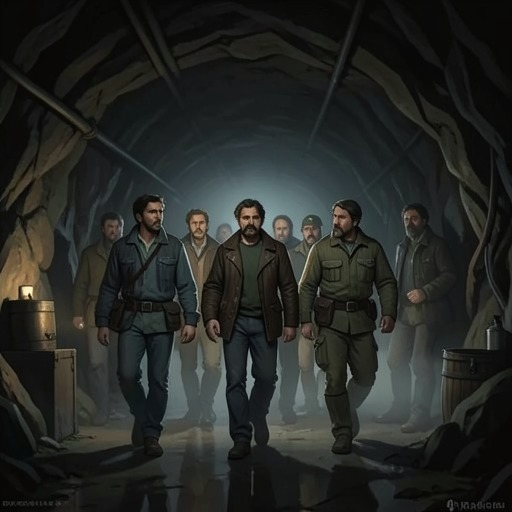
Henry describes the three travelers meeting the hardship differently. Professor Hardwigg bears it with controlled anger, as though conscious of having made a mistake. Hans endures it with characteristic resignation. Henry, by contrast, complains and despairs, admitting that he cannot take heart from their bad fortune. The return therefore tests both their physical endurance and their different responses to a failure of direction.
Their remaining liquid does not solve the crisis. On the first day of the march, the water is completely exhausted, leaving only Schiedam, which Henry finds undrinkable. The temperature feels stifling to him, and fatigue repeatedly brings him close to losing consciousness. When he can no longer continue, the party halts; Hans and Professor Hardwigg try to comfort him. Henry also recognizes that his uncle is struggling against the same fatigue and the hardship of going without water, even as he continues to care for his nephew.
Arrival at the junction
The return takes until Tuesday, July 7. After crawling for hours, the travelers reach the point where the galleries divide at ten in the morning. Their arrival completes the immediate objective set by the dead end: they have recovered the route junction from which they can choose their way forward again.
The achievement comes at the cost of near collapse. Henry lies inert on the dry lava ground, unable to do more than breathe painfully. Hans and Professor Hardwigg lean against the wall and try to eat pieces of biscuit. Henry then sinks into a deep lethargy. His uncle approaches and lifts him tenderly, calling him a poor boy in a tone of deep commiseration. The episode ends not with a renewed decision or a triumphant resumption of the journey, but with Henry incapacitated and dependent on the care of the two companions who have brought him back.
Consequences and narrative significance
The return restores the expedition to the junction but does not undo the consequences of the wrong turn. The party has spent days retracing its route while its water supply disappeared, and its members reach the junction profoundly weakened. Professor Hardwigg’s confidence that the setback can be corrected meets Henry’s estimate of a five-day march and the actual hardship of proceeding without water; the contrast makes the cost of the detour concrete.
The scene also sharpens the differences within the group without separating them. Henry’s despair, Hans’s patience, and Professor Hardwigg’s restrained anger mark distinct reactions to the same danger, while Hans and the professor still stop to comfort Henry and his uncle ultimately carries him. In the narrative, the junction is both a navigational recovery and a point reached through dependence: the party can recover its route only after its most exhausted member has been brought back to the edge of what he can endure.